
Moultrie County Court Records After a Jail Arrest
When someone is arrested and booked in Moultrie County, the jail records the custody, but the court record begins later. A prosecutor in the State's Attorney's Office reviews the arrest, decides what to charge, and files a charging document that opens a case in the Sixth Judicial Circuit. From that filing forward, the charges, the hearings, and the disposition form the court record that follows an arrest. The State's Attorney prosecutes all state criminal and traffic cases for the county.
It helps to keep the two sides apart. The booking side, custody status and the arresting agency's charges, lives with the jail; see jail inmate records for the roster and booking detail, and the jail mugshots page for booking photos. The court record is what the prosecutor actually filed and what the judge is deciding. The two can differ, and the difference is exactly why people check the court file after an arrest rather than relying on the booking charges alone.
How to Find Moultrie County Court Records After an Arrest
Public court records for Moultrie County cases run through the Circuit Clerk and the Judici case-search system. The Circuit Clerk and the State's Attorney both point the public to Judici, and the clerk's standalone site notes that records for cases beginning in 1990 are available there. A verification step can appear on the Judici page before a search runs. Booking and arrest detail stays on the jail side, while charges and case events appear in the court index.
- Open the Judici case-search page for Moultrie County and clear any verification prompt.
- Search by the defendant's name or the case number if you have it.
- Open the case and read the list of charges the prosecutor filed.
- Check each charge's statute citation, class, and current status.
The county courthouse handles filings, hearings, and clerk records in person, and its directory page lists hours, the circuit, and access resources.
That directory is published at the Illinois Courts Moultrie County Courthouse page, which lists the courthouse address and online-records link for District 5, Circuit 6.
For a file too old for the online range, sealed, or in need of certified copies, the Circuit Clerk at 217-728-4622 is the office to call. Older records can be thin: the county courthouse burned in 1864 and destroyed a large share of early records, which is part of why online files start in modern decades.
Finding a Court Date After an Arrest
Once charges are filed, the court schedule becomes part of the record. The Circuit Clerk keeps the case file and the hearing calendar, and the Judici index shows scheduled dates for cases in its range. For a date you cannot find online, the Circuit Clerk's office is the place to call. The clerk, Christa S. Helmuth, works from 10 S. Main St., Suite 7, in Sullivan, and the office keeps weekday hours.
The county also offers an official Moultrie County Circuit Clerk mobile app on the Apple App Store and on Google Play. It is built for communication with area residents and is tied to the court system, not the jail. It is not an inmate roster, a warrant search, or a mugshot tool, so use it for court-clerk contact rather than custody lookups. For custody and court-event alerts, Illinois VINE can notify you by call, text, or email when a status changes.
How Charges Get Filed After an Arrest: Complaint, Information, and Indictment
The charge record starts when the prosecutor files a charging document. Three types do that work in Illinois. A complaint often opens a case right after an arrest. An information is the prosecutor's own formal charge filed without a grand jury, common in many felony and misdemeanor matters. An indictment is a grand jury's charge, used for serious felonies. Each one starts the court case that the public record tracks.
| Complaint | Information | Indictment | |
|---|---|---|---|
| Filed By | Officer / Prosecutor | Prosecutor | Grand Jury |
| Common For | Early charges, misdemeanors | Many felonies and misdemeanors | Serious felonies |
| Starts | The case | The case | The case |
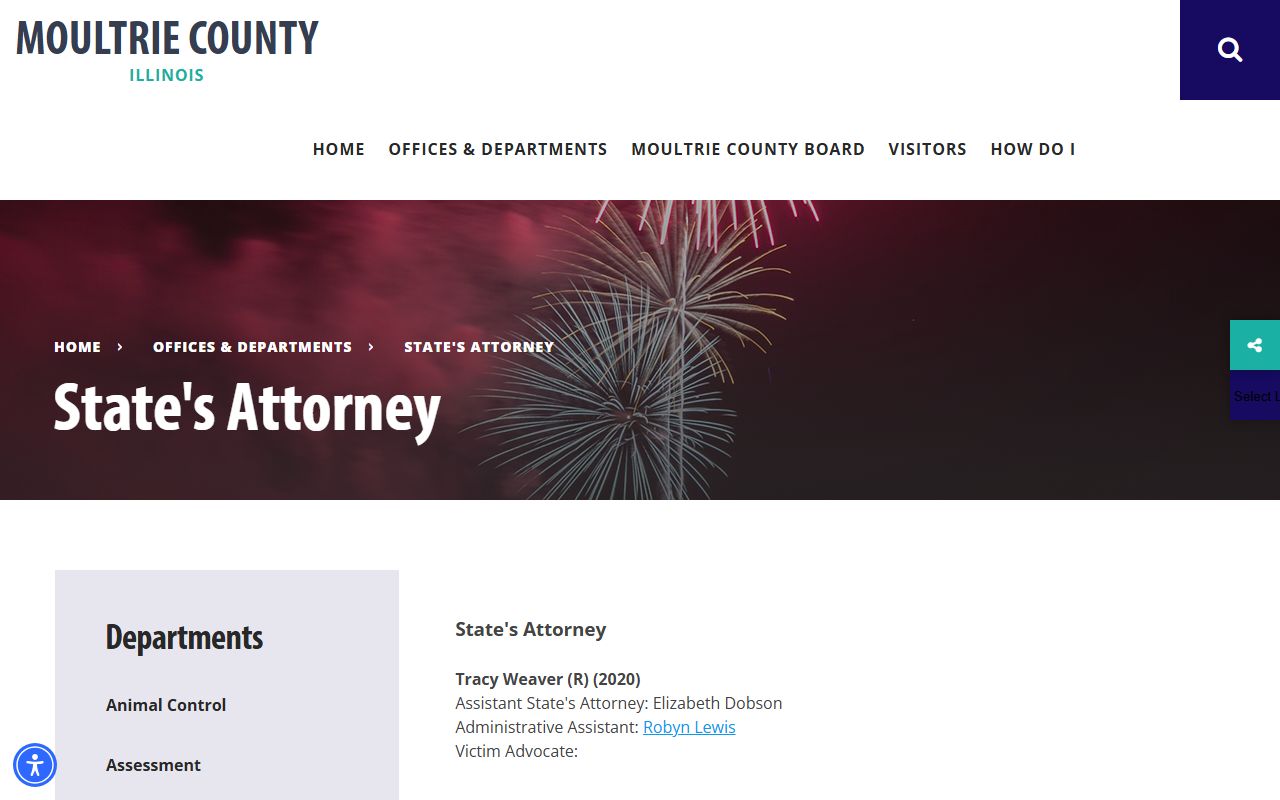
The State's Attorney's Office decides which charges to file and may change them from what the arresting agency listed at booking. Its page describes the prosecution role and points the public to the court record on Judici.
That role is set out on the Moultrie County State's Attorney page, which names the prosecutor and notes that court records are kept online through Judici.
Because the prosecutor controls the filed charges, the court record is the authoritative source for what a person is actually accused of after an arrest.
Charge Status and What It Means
Charges shift as a case moves. A prosecutor can amend, reduce, add, or drop a charge, and a court can dismiss one. The booking charges on the jail side can differ from the charges that survive in the court record. The table defines the common status terms you will see in a Moultrie County case file.
| Status | What It Means |
|---|---|
| Pending | The charge is filed and the case is still moving through court. |
| Amended / Reduced | The charge was changed, often to a different class or a lesser offense. |
| Dismissed | The charge was dropped by the court and is no longer being pursued. |
| Nolle Prosequi | The prosecutor chose not to pursue the charge further. |
Note: a court record showing a charge does not mean a conviction, and a dismissed or nolle charge is not a finding of guilt.
Bond and Release After an Arrest
Release decisions in Illinois changed with the SAFE-T Act and its Pretrial Fairness Act. Money bail is no longer the central release mechanism for many criminal cases. Instead, a judge decides at an early hearing whether a person is released, released with conditions, or detained pending further proceedings. A person can still face warrants, holds, or specific court-ordered conditions depending on the case.
| Release Type | How It Works |
|---|---|
| Release on conditions | The court allows release with non-financial conditions such as check-ins or no-contact orders. |
| Detention order | The court orders the person held pending further proceedings. |
| Recognizance / promise to appear | Release based on a promise to return for court and follow conditions. |
| No-bond hold | A hold, warrant, or detainer from another case or agency blocks release. |
The Moultrie County pages do not publish a bond-posting instruction or accepted payment methods, so verify release status with the jail at 217-728-4386 and the case details with the Circuit Clerk. If a hold or warrant from another county, the state, or a federal agency applies, confirm with that agency before assuming a local action will lead to release.
Warrants That Lead to an Arrest
An outstanding warrant is a common road to a booking. The Sheriff's Office handles the civil process of warrants, mittimus, and court orders, but no public searchable warrant list is posted for Moultrie County. To check on a warrant tied to a court case, search the case on Judici for a failure-to-appear or bench-warrant entry, or call the Circuit Clerk at 217-728-4622. For a warrant that may have led to custody, the jail line at 217-728-4386 is the place to ask.
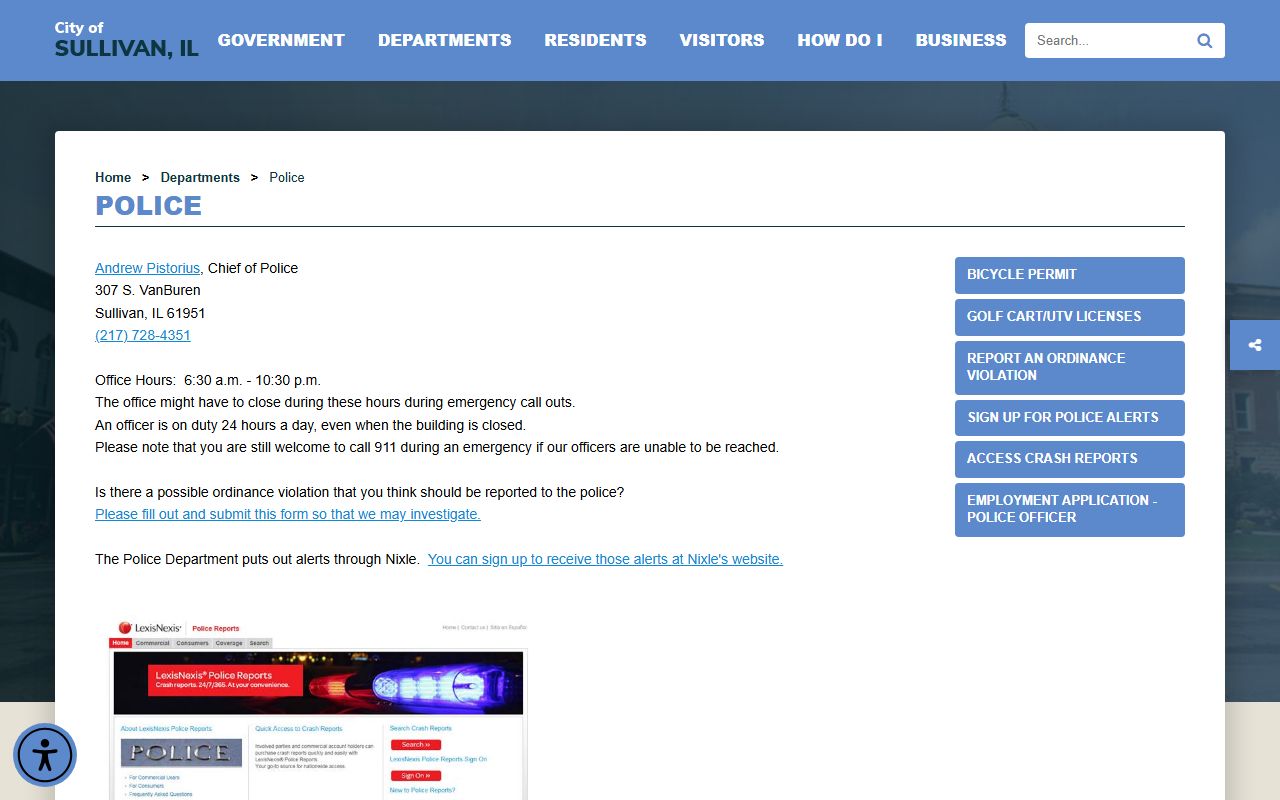
Arrests in the county can also come from the Sullivan Police Department, the main municipal agency in the county seat. Its page carries contact details and alerts but no inmate or warrant lookup.
The municipal contact is on the Sullivan Police Department page, which notes 24-hour officer coverage and routes alerts and crash reports through outside services.
Whichever agency makes the arrest, the resulting charges still flow to the same county court record once the prosecutor files them. Do not ignore a bench warrant; address it with an attorney or by appearing in court as directed.
Charges vs. Convictions in a Court Record
An arrest and a charge are accusations, not proof. A conviction requires a plea or a verdict. Both a charge and a conviction can appear in a public court record after an arrest, but they sit at very different stages of the case.
| Charge | Conviction | |
|---|---|---|
| Stage | Accusation | Verdict or plea |
| Burden of Proof | Probable cause | Beyond a reasonable doubt |
| Public Record | Yes | Yes |
Sealed vs. Expunged Arrest Records
Illinois lets people clear some records after an arrest through sealing or expungement. Sealing hides a record from most public view while letting limited agencies see it. Expungement goes further, removing or destroying the record so it is treated as if it never existed. Eligibility depends on the offense and the outcome, and it is set by Illinois law rather than the county. A dismissal or an acquittal often opens the door to relief that a conviction would not.
| Sealed | Expunged | |
|---|---|---|
| Visibility | Hidden from public view | Destroyed or treated as never existing |
| Law Enforcement | Limited access | Very limited access |
| Eligibility | Set by Illinois law; varies by offense and disposition | Set by Illinois law; broader after dismissals and acquittals |
Background Check Considerations
A court file viewed out of curiosity is not the same as a regulated background check. Formal employment, tenant, credit, or insurance screening must follow the federal Fair Credit Reporting Act and is run by licensed consumer reporting agencies. Casual public-record lookups do not carry those protections and must not be used for those decisions.
Important: This site is not a consumer reporting agency under the FCRA, and its content cannot be used for employment, housing, credit, or insurance screening.
Restricted Court Records After an Arrest in Moultrie County
Some records after an arrest are limited even when a case exists. Juvenile matters are confidential, and the State's Attorney's Office will not give out juvenile case information over the phone. Sealed charges, certain dismissed charges, and records tied to an ongoing investigation can be withheld or restricted. Illinois arrest-report law also lets agencies hold back specific details when release would interfere with a pending law-enforcement proceeding, endanger safety, or compromise jail security. When a record is restricted, the Circuit Clerk or the prosecuting office can explain the basis rather than a private database.